Who Cares About Kindness? Do Young People Want Community? And What Do the Parents of Teenagers Worry About?
Unpublished findings from our new survey
Last month, we released a new survey report, Strangers Next Door: The Decline of Neighborhood Socializing and the Class Divide in Belonging, which detailed the changing relationships we have with people living near us. I'd encourage you to read it. As often happens with a survey like this, not all the polling results made it into the published report. This week, I want to share some of the most fascinating stuff that didn’t make the final cut.
Do Young Adults Want Community?
The term “third place” was not something I came across until I reached graduate school, but it feels like there is growing public interest (at least in online discourse) in community spaces. It seems like we’re awash with articles exhorting young people to build their community. But when asked, we found that few young people believe it’s very important to live in a place where people look out for each other.
Overall, nearly half (46 percent) of Americans say it is “very important” to them personally to live in a community where people look out for each other. Only about one in three (35 percent) young adults say this is very important, but the age gap is especially notable among women. Only thirty six percent of young women say it’s very important to live in a place where people look out for each other, compared to 60 percent of women age 65 or older. That’s a 24-point age gap.
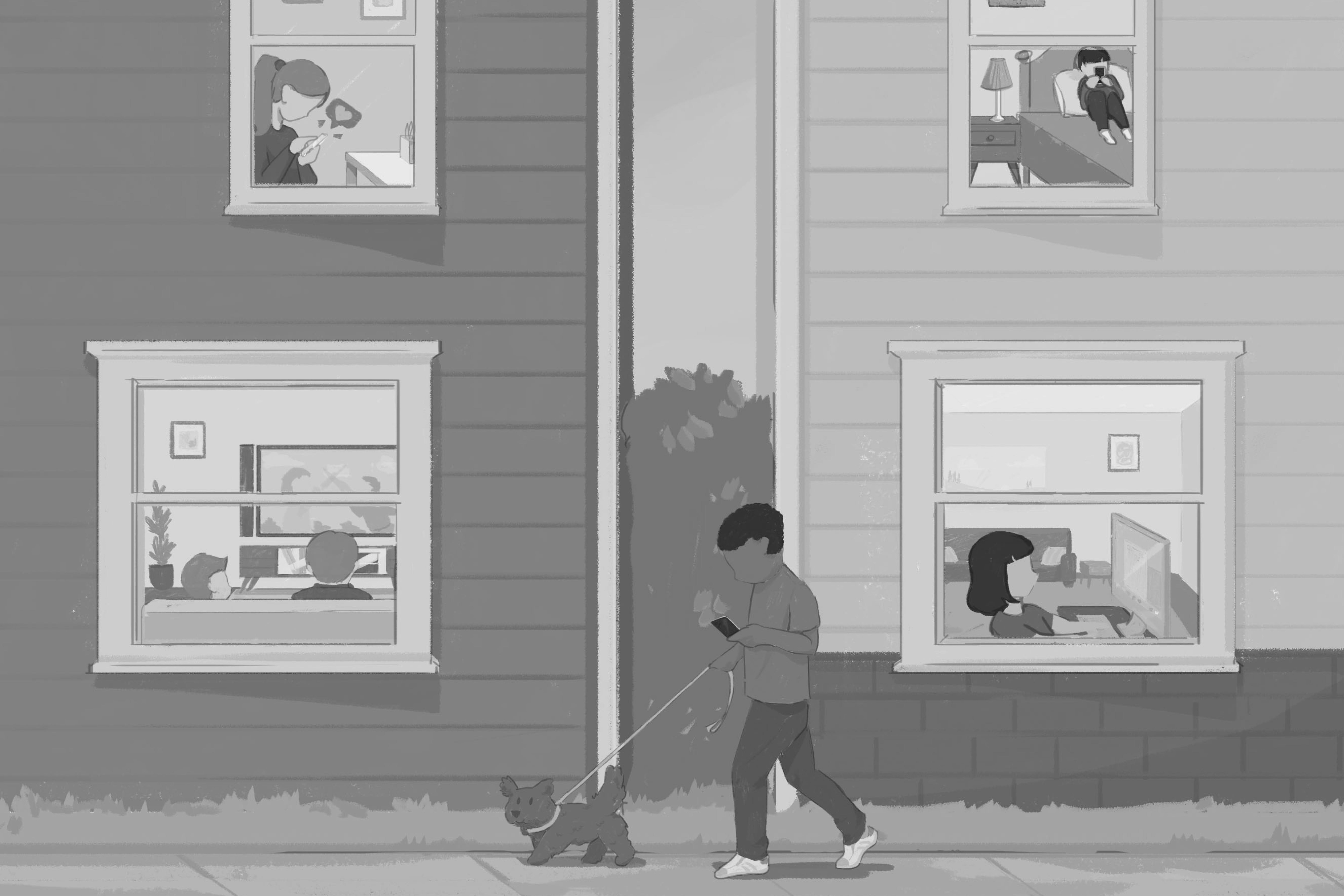
What’s going on here? Generational differences in religious participation are an obvious potential culprit. Religiously active Americans are more likely to prioritize a tight-knit community than those who are less active. Lower rates of marriage and family formation might also alter the way young adults build community. Increasingly, I wonder if we’ve overlooked the role that technology—specifically, web-enabled smartphones—is playing in how we think about ourselves and our relationships with others. Modern technology has empowered us to do so many things without help. We are capable of answering almost any question with AI; we can learn how to do things by watching tutorials on YouTube; we can keep up with the news or with our friends on social media. We no longer need to ask for directions, restaurant recommendations, or a ride. It can all be accomplished with our phones. We’ve effectively taught an entire generation that they do not need each other. In our report, we found that young adults were most likely to want their neighbors to stay out of their business.
Or perhaps it’s simply that “everyone wants a village, but no one wants to be a villager.”
Is Lack of Kindness a Problem in the U.S.?
Who is most concerned about “the lack of kindness and compassion” in the U.S. today? In our new survey, I included a battery of questions probing the public about what they perceived were the most serious problems facing the country. In a list that includes issues such as wages and cost of living, racism, sexism, gun violence, and illegal immigration, we also dropped in the following: “lack of kindness and compassion.” It didn’t top the list of problems, but it was still listed as a “very big problem” by plenty of Americans. Forty-three percent said the lack of kindness and compassion was a major issue in the U.S.
Women care slightly more about kindness than men, and there is a similar gender gap among young people. But the people who care most about the lack of kindness and compassion in the U.S. are women over 50, especially nonwhite women. A majority of black and Hispanic older women say the dearth of kindness in the country is a major problem. White Americans, including older women, are far less concerned.
There is a political dimension to all this as well. Liberals are more concerned about America’s kindness deficit than conservatives––substantially so. And liberal women express the greatest concern of all—58 percent say it is a very big deal. Conservative men are least inclined to say that the lack of kindness and compassion is an important problem. Only 34 percent of conservative men say it is a big problem for the country. One wrinkle in these findings is that liberals tend to rate most of the issues included on the list as more serious problems than do conservatives. So, it might be that conservatives simply feel that the country is in a better place overall than liberals. Another possibility is that, given Trump’s penchant for inconsiderate, callous, and spiteful remarks, conservatives are simply less troubled by this type of expression in general. Perhaps being kind—or, at the very least, concerned about its absence—has been sucked down the polarization vortex along with everything else.
What Do Parents of Teenagers Worry About?
There’s a saying that when kids are little, so are their problems. They may require near-constant attention, but the amount of trouble a toddler can get into is comparatively minor. Then, when kids grow, so do their problems. In our latest poll, we asked parents what kinds of things they worry about for their kids—some probed about their current state, while others looked towards the future. The results showed that two things worried the parents of teenagers more than anything else: social media and their children’s future career prospects.
When it came to their teen’s social media use, nearly half (46 percent) of parents with kids between the ages of 14 and 17 said they worried often or constantly about the amount of time their kids were spending on social media. A similar share (42 percent) said they frequently worried about whether their kids would be able to find a job or career that would provide financial security.
Everything else we asked about was cause for less concern, at least for most parents of teenagers. Fewer than three in ten parents mentioned bullying (23 percent), drugs or alcohol (20 percent), lack of friends (23 percent), or that their kid might not find a good partner or spouse (25 percent).
Parental worries varied somewhat by education. Parents without a four-year degree are four times more likely to worry their kids might develop problems with drugs or alcohol (25 percent vs. 8 percent, respectively). They are also about twice as likely to worry about bullying (27 percent vs. 14 percent). Notably, college-educated parents are significantly more concerned about their kid developing close friendships (31 percent vs. 19 percent).
If there is one constant in parenting, it is worrying about your kids. The nature of the concern can vary a great deal depending on the type of parent and the type of kid. Yet, in modern parenting, concerns are increasingly focused on technology and the lack of control many parents feel about how their kids are using it.


