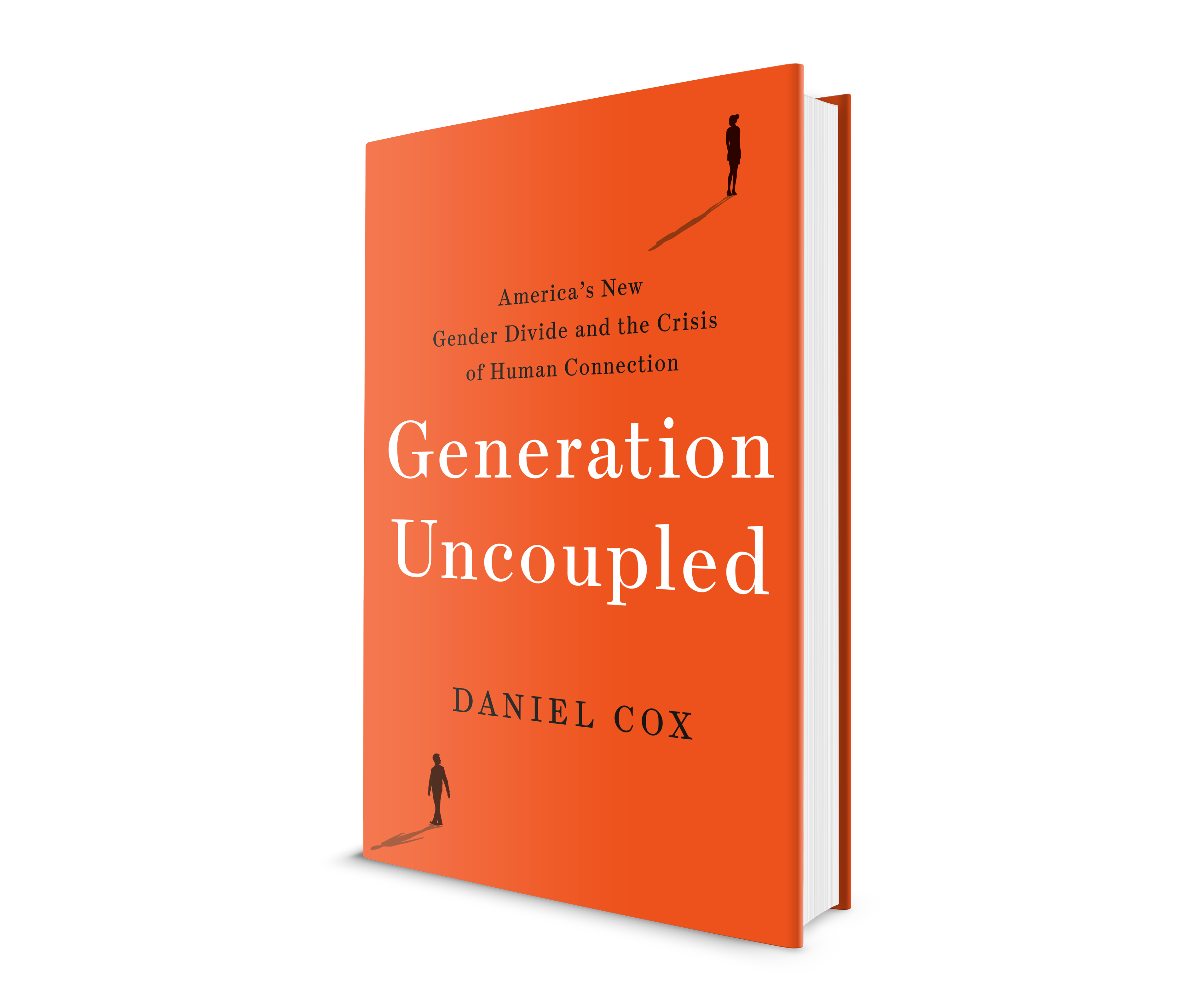
Generation Uncoupled was released this week! We held a public release event yesterday in Washington, D.C. and a private dinner with a few colleagues and journalists. It was an edifying conversation and I’m looking forward to having more.
An excerpt of my book was just published at The Free Press, check it out!
I’ve also spoken about the book on a number of podcasts, including The Remnant, The Gray Area, and Something You Should Know.
As a reminder, annual subscribers or long-term monthly subscribers are eligible to receive a free book. Simply send an email with your physical address to this email: generationuncoupled@gmail.com. Also, for those who purchase a book by Sunday, I’ll provide a free annual subscription to American Storylines. Simply submit a photo of your receipt to the email above.
One of the challenges of completing work on an intense, long-term project such as a book is that it commands so much of your attention, and you have little time for much else. Now that I’m writing less, I’m reading a bit more. I’m a voracious consumer of short-form news pieces, trends stories, and social analyses. What I read often serves as fodder for polling projects. As I was scrolling through Substack yesterday, I noticed something odd has happened since I last spent time on the platform. My Substack feed, which tends to include a lot of relationship and dating content, has taken a decidedly darker turn. Interspersed with midterm polling analyses, there are a growing number of articles about dating that are relentlessly negative.
“I Broke up with my Micro-Cheating Boyfriend”
“I got a boyfriend and I’m not ok”
“Maybe I’m Supposed to Be Alone”
“Things Men Say That Should Make You Rethink Staying”
“Never Date a Conventionally Attractive Man”
“The Worst Thing a Woman Can Do? Get Married to a Man. The Best Thing a Man Can Do Is Get Married to a Woman.”
“Thinking of having a baby? Here’s my advice: think twice”
All of these posts came through my feed in a single afternoon. No doubt, my algorithm is responsible for much of this content given the focus of the book, but I don’t think the tone is all that unrepresentative of how many young women (and young men) feel. In the hundreds of hours of conversation I had with young single men and women, there was a sense of despair about dating, romantic partnership, and marriage. Instead of the excitement of possibility, there was pervasive pessimism. I understand, probably better than most now, why this has happened. But instead of offering an explanation, what I thought I would do instead is share my thoughts about how we move beyond the cynicism present, to a more hopeful future. After spending 10 chapters documenting how social technologies, a cultural of hyper-individualism, and institutional decline contributed to mass social avoidance and mistrust, I wrote two chapters that were future focused. I want to share one section from Chapter 13. I hope it leaves you with a sense that things are not so dire.
Social media is awash in terrible relationship advice. In one recent post on X, a young woman shared her experience of breaking off a relationship with the boyfriend who wanted to marry her because she was still infatuated with another guy who was only interested in sex. The responses—mostly from women—largely supported her decision. More than a few posters argued that her ex-boyfriend was not entitled to anything from her. “You don’t owe him anything.”
This has become a reflexive comment used to shield ourselves against any sense of responsibility to other people. And it is nearly always wrong. We don’t owe every person everything, but we owe them something. It might be acknowledging someone’s perspective, giving someone our full attention, or offering respect. Perhaps it’s much more than that. We show each other kindness, respect, and decency not because people are worthy of these expressions, but because we are capable of providing them. A culture of obligation is built piece by piece, with small gestures, simple acts of compassion, and a consistent regard for others.
I tend to believe that the insistence that we don’t owe much of anything to anyone is not only about maintaining independence in our lives; more Americans have become increasingly uncomfortable with expressions of devotion, especially acts of service to romantic partners. Manosphere influencers castigate men who prioritize their wife’s career or put her professional needs ahead of their own. Young women ponder publicly whether even wanting a boyfriend is cringe. A Vogue article titled, “Is Having a Boyfriend Embarrassing Now?” set off a firestorm about the state of dating. On Instagram, a torrent of comments from young women expressed support for the argument.
“The value of having a boyfriend has depreciated.”
“Having a bf is a PR disaster.”
“It’s a humiliation ritual.”
“It just doesn’t fit my brand.”
“Every boyfriend I’ve ever had has embarrassed me.”
There are hundreds more. It’s incredibly bleak.
We live in a culture that no longer celebrates relational accomplishments. Being in a healthy marriage is an accomplishment. Being an active parent and raising kids who can be constructive and kind is praiseworthy. Many young Americans scoff at the notion of dedicating their lives to public service only because it has become more difficult to imagine engaging in this behavior in their private lives. Our romantic relationships have become transactional rather than transformational.Admitting that we owe something to one another doesn’t require grand gestures or sweeping sacrifices, but rather a recognition that none of us can make it on our own. It means caring about how our actions impact those around us and appreciating how technology degrades our capacity to connect. When someone seeks support, affection, or attention, both the giver and the receiver are benefited—it is this need that creates bonds of trust and reciprocity. Whether in public spaces or in private moments, men and women have a role in rebuilding our sense of trust. Simply because it has become easier to survive on our own does not mean men and women do not need one another.
This more than anything else, is the message I hope to leave readers with. We need one another to survive and to thrive. It is not possible to build a full and meaningful life without a good number of other people in it. This doesn’t make us weak, or flawed, but human.
Happy reading! Drop me a note in the comments about what you liked (or didn’t), questions you may have, or thoughts you want to share. The book is finished, but the work is not. We’re embarking on a number of new research projects in the coming months informed by the work I did for Generation Uncoupled. I look forward to sharing these with you.